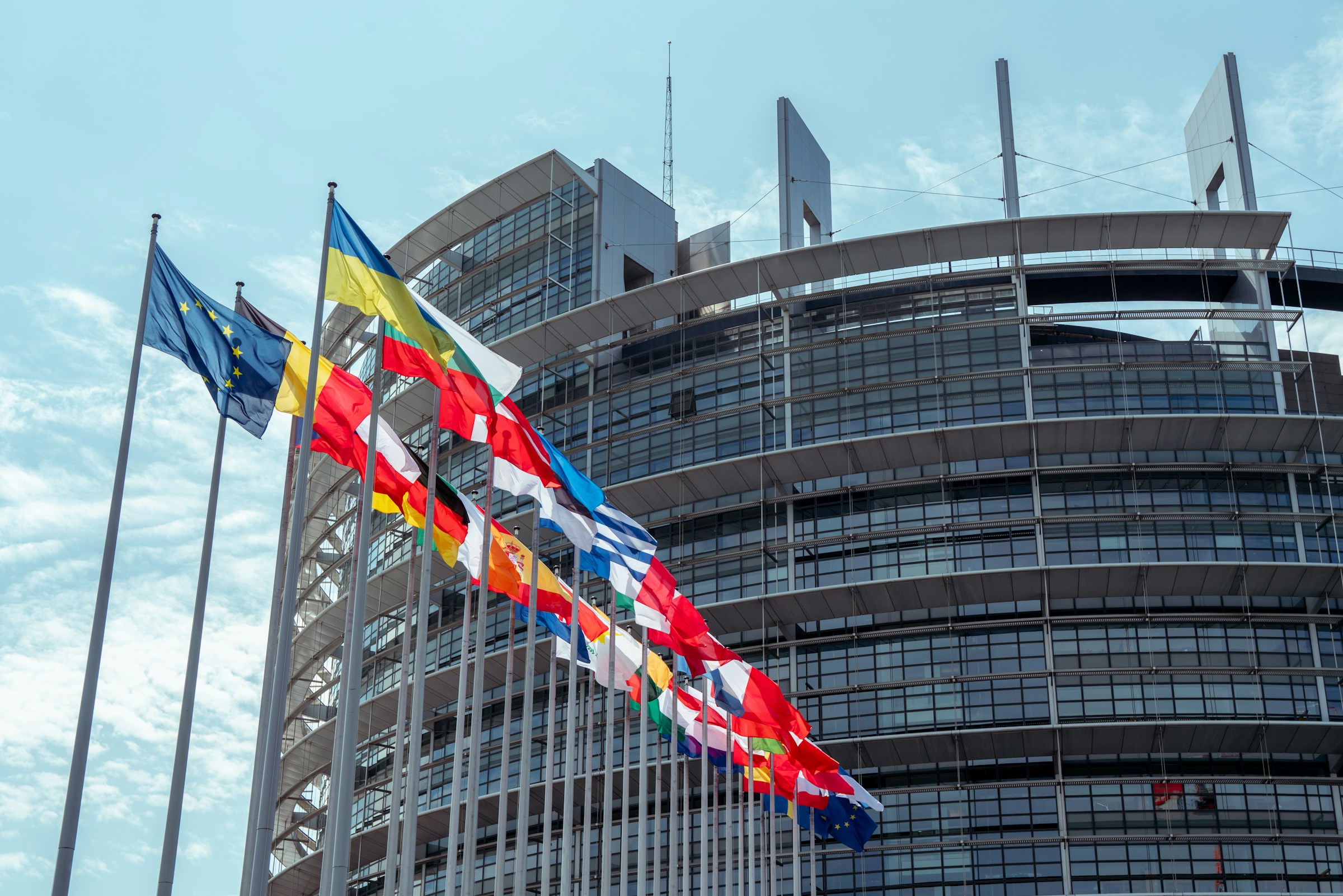
The Transatlantic Economy: from the Tariff War to the Trade and Technology Council
by Gabriele Bertani Introduction The transatlantic relationship has had a bumpy ride in the last few years, from Trump’s bashing of Europe over the level


by Gabriele Bertani Introduction The transatlantic relationship has had a bumpy ride in the last few years, from Trump’s bashing of Europe over the level

We all have encountered wild animals, be it a bird chirping outside your window or a racoon scavenging through your garbage.Residents of Taraza found themselves to be worried about a sloth hanging down live wires. Such interactions between wild animals and humans have become more frequent. One might wonder why we see these animals so often in our homes when they are supposed to be in theirs?

Latin America’s elections in 2021 showed us that politics in the region are alive and livelier than ever as people are eager for change. Much of the world has shifted towards the Right of the political spectrum while Latin American countries such as Chile, Peru and Honduras have swung left in 2021 signaling a reinforcement of the shift in political leaning that has taken hold in the region (Londoño, Turkewitz and Flávia Milhorance, 2022). The political reversal began with the election of leftist presidents in Mexico in 2018, Panama and Argentina in 2019, and Bolivia in 2020 [ibid.]. Other elections in 2021, such as those in Venezuela and Nicaragua have secured the status quo for the authoritarian regimes in what many international observers have called shame elections (MEPs condemn “electoral farce” in Nicaragua, 2021). In 2022 there are still important elections to come in Colombia, and the largest Latin American state, Brazil. It is worth looking back at the recent elections to understand the shift taking place in the region and how they may signal what is to come in the upcoming elections.

Imagine a crisis situation in which you are the person to decide what to do next. How would you react? This book puts you in precisely that situation, and guides you through the risky world of decision making. Along the Cuban Missile Crisis in 1962, political scientists Graham T. Allison and Philip Zelikow introduce the reader into the intricacies of governmental decision-making. The book was originally published in 1971 but was edited again after a series of declassified information were uncovered, shining light to the time where nearly a nuclear Armageddon might have happened.

On November 9th, 2020, the Peruvian Congress agreed, by 105 out of 130 votes, to vacate President Martin Vizcarra Cornejo on the grounds of “permanent moral incapacity” under Article 113(2) of the Political Constitution of Peru. The main basis for this decision was the alleged bribes the President received when he occupied the position of Regional Governor of Moquegua from 2011 until 2014, as confessed by three to-be whistle-blowers during the debate held in Parliament. As a result, the seat of President should have been transferred to the Vice-President. However, due to the resignation of Mercedes Araoz, the line of succession, according to Article 115 of the Constitution, now moved to the Speaker of Congress, Manuel Merino de Lama, at the moment in which the political crisis began.

Relations within the triangle of the United States, Europe and Russia are currently experiencing tough times. Sanctions and counter-sanctions that continue to be imposed due to the contradiction of the parties on several major issues, such as the crisis in the east of Ukraine, especially the annexation of the Crimea, the war in Syria do not lead to a constructive dialogue between the parties. In this report I will propose a number of ideas that, in the my opinion, could contribute to improving relations within the triangle (I insist on trilateral (not the bilateral) nature of these relations, because although European countries often act in coalitions with the United States the idea which will be considered below implies exactly three participants and therefore European countries should be considered as independent players).

The modern international affairs suffer from instability in all regions of our world. The global trend is the emergence of the multi-polar world in return for the one-polar system of IA with the leading role of the US. This process is accompanied by the appearance of the new actors in the IA and changes in the roles of the existing players. As a vivid example, the EU which used to be called the most advanced integration in the world is now under rethinking of the idea of European integration. The inner problems resulted in the ongoing crisis. The end of this crisis is impossible to foretell. That is why it is highly important to analyze the current situation in the EU for understanding of the bilateral relations of the European integration with the US and Russia.

At the moment, there is an ongoing controversy surrounding the sharp warming of relations between the US and France. E. Macron, whose speech on the historic partnership of the states was greeted with ovations in Congress, claims to be the main advocate of the interests of the European Union before the United States. This trend is particularly noticeable as it is timed to coincide with tension between D. Trump on the one hand, and A. Merkel and T. May on the other. In this research, we analyze the potential of France as a key player in building a new Euro-Atlantic partnership.